


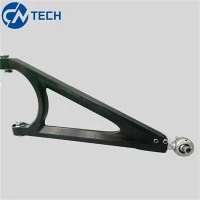

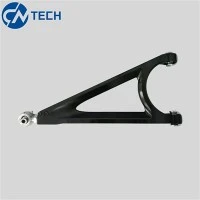
Rod end joints serve as critical components in mechanical or automotive systems for connecting rods. Their primary functions include transmitting motion, absorbing impact, adjusting direction or angle, and ensuring connection stability. Below are specific classifications and functions:
Motion Transmission
Floating Joint: Allows rod deflection within a specified range (±5°), absorbs eccentric or non-parallel loads, suitable for connecting cylinders to loads, reducing damage to piston rods.
Elbow Joints (I-Type/Y-Type): Connect loads via pins, suitable for scenarios requiring unidirectional or bidirectional motion, such as robotic arms or hydraulic systems.
Adjustment and Fixation
Tie Rod Ends: In automotive steering systems, ensure synchronized movement of left and right steering wheels, prevent body roll, and enhance handling stability.
Adjustable Tie Rod Joint: Optimizes steering geometry and extends service life by threadedly adjusting the distance between the joint and tie rod.
Sealing and Connecting
Socket Flare Joint: Used in piping systems for sealed connections via sealing rings and nuts, suitable for building water supply and drainage.
Threaded Flare Joint: Connects steel pipes via threaded engagement for enhanced sealing and connection strength, suitable for industrial piping.