


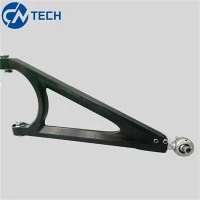

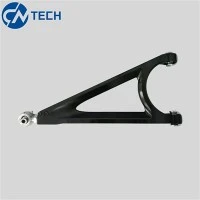
Product Structure
The connecting rod is a mechanical device composed of a fixed rod and a movable rod. One end of the fixed rod is anchored, serving as the base for the connecting rod, while the other end functions as the base for the movable rod. One end of the movable rod connects to the object being joined, and the other end connects to the fixed rod via sliding or rotational movement. Typically, a spring mechanism is positioned at the center of the connecting rod to restore the movable rod to its original position.
Working Principle
The operating principle of the connecting rod is based on fundamental mechanical principles, primarily leverage and elastic mechanics. When an external force acts upon the connected object, the movable rod slides or rotates along the fixed rod, generating displacement. This displacement is recorded by the spring mechanism. Upon removal of the external force, the spring returns to its original state, propelling the movable rod back to its initial position.
Product Advantages
The connecting rod offers the following benefits:
Simple Operation: Its straightforward structure ensures easy handling.
Flexible Adaptability: It connects objects of varying shapes and sizes while allowing adjustable connection angles.
Automatic Reset: The spring mechanism enables self-recovery after external stimulation ceases, enhancing usability.
Application Scenarios
The connecting rod finds extensive use across diverse fields, including machinery manufacturing, transportation, construction engineering, and artistic creation. For instance:
In machinery manufacturing: Connecting various mechanical components.
In transportation: Joining different vehicle sections.
In construction engineering: Linking diverse structural elements.
In artistic creation: Constructing various sculptural forms.