


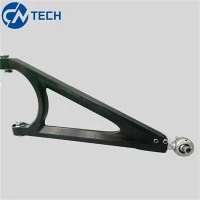

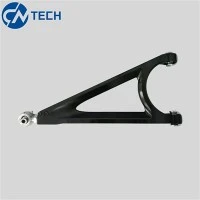
Ball joints have found extensive use across multiple fields due to their unique advantages.
Mechanical Equipment
In mechanical equipment, ball joints connect components at different axial or angular positions, enabling rotational or oscillating motion. Their excellent load-bearing capacity and stability ensure reliable operation in complex environments.
Aerospace
Within aerospace applications, ball joints are favored for their high load capacity and impact resistance. They are extensively employed in structural connections for aircraft, rockets, and other aerospace vehicles, ensuring safety under extreme conditions such as high altitudes, high speeds, and heavy loads.
Bridge and Construction
In bridge and construction engineering, ball joints primarily connect various sections of bridges or structures to accommodate loads and deformations in different directions. They resist impacts from natural disasters like earthquakes and winds, enhancing structural stability and safety.
In summary, spherical joints have gained extensive application across multiple fields due to their unique spherical design and superior performance. With ongoing technological advancements, the design and manufacturing techniques for spherical joints will continue to evolve, providing more reliable and efficient connection solutions for diverse industries.