


As a seasoned supplier of forks clevis, I've delved deep into the various aspects of this crucial component, and one question that often surfaces is about its chemical resistance. In this blog, I'll explore what chemical resistance means for forks clevis, why it matters, and how we ensure our products meet the highest standards.
Understanding Chemical Resistance in Forks Clevis
Chemical resistance refers to a material's ability to withstand the corrosive effects of various chemicals without significant degradation. For forks clevis, which are used in a wide range of industries including automotive, aerospace, and manufacturing, chemical resistance is of utmost importance. These components are often exposed to harsh environments where they may come into contact with chemicals such as acids, alkalis, solvents, and salts.
When a forks clevis is exposed to chemicals, it can undergo a series of chemical reactions that can weaken its structure, reduce its strength, and ultimately lead to failure. For example, exposure to acids can cause metal components to corrode, while solvents can dissolve certain types of coatings or plastics used in the clevis. This not only affects the performance of the clevis but also poses a safety risk in applications where reliability is critical.
Factors Affecting Chemical Resistance
Several factors influence the chemical resistance of forks clevis. The most significant factor is the material used in its construction. Different materials have different levels of resistance to various chemicals. For instance, stainless steel is known for its excellent resistance to corrosion and oxidation, making it a popular choice for forks clevis used in harsh environments. Aluminum, on the other hand, is lightweight but may be more susceptible to certain chemicals, especially acids.
The surface finish of the forks clevis also plays a crucial role in its chemical resistance. A smooth, clean surface is less likely to trap chemicals and is therefore more resistant to corrosion. Coatings such as zinc plating, powder coating, or anodizing can provide an additional layer of protection against chemicals. These coatings act as a barrier between the metal surface and the chemicals, preventing direct contact and reducing the risk of corrosion.
The design of the forks clevis can also affect its chemical resistance. Components with complex geometries or tight crevices may be more difficult to clean and may trap chemicals, increasing the risk of corrosion. Therefore, it's important to design forks clevis with simplicity and ease of cleaning in mind.
Importance of Chemical Resistance in Different Industries
Automotive Industry
In the automotive industry, forks clevis are used in various applications such as steering systems, suspension systems, and engine components. These components are often exposed to road salts, engine oils, and other chemicals. A lack of chemical resistance can lead to corrosion, which can compromise the safety and performance of the vehicle. For example, corrosion in the steering system can cause the steering to become loose or unresponsive, increasing the risk of accidents.
Aerospace Industry
The aerospace industry has extremely high standards for component reliability and safety. Forks clevis used in aircraft are exposed to a variety of chemicals including hydraulic fluids, de - icing agents, and cleaning solvents. Chemical resistance is essential to ensure the long - term performance of these components. A failure in a critical component due to chemical corrosion can have catastrophic consequences, making chemical resistance a top priority in aerospace applications.
Manufacturing Industry
In manufacturing plants, forks clevis may be exposed to a wide range of chemicals depending on the type of manufacturing process. For example, in a chemical manufacturing plant, they may come into contact with strong acids and alkalis. In a food processing plant, they may be exposed to cleaning agents and food acids. Chemical resistance is necessary to prevent contamination of the products being manufactured and to ensure the longevity of the equipment.
Our Approach to Ensuring Chemical Resistance
As a supplier of forks clevis, we take several steps to ensure the chemical resistance of our products. First, we carefully select the materials based on the specific application requirements. For applications where high chemical resistance is needed, we often choose stainless steel or other corrosion - resistant alloys.

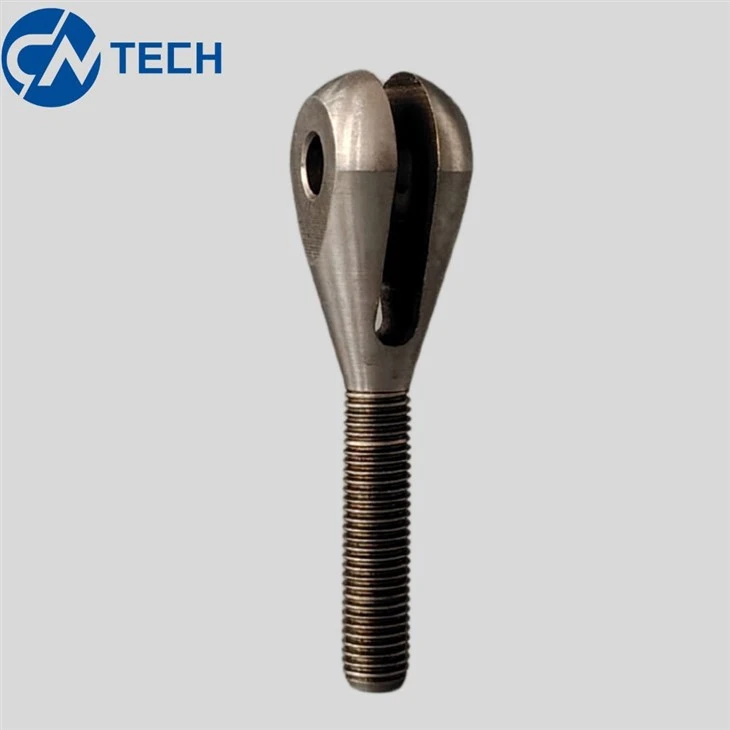
We also pay close attention to the surface finish of our forks clevis. Our manufacturing process includes precision machining to ensure a smooth surface. In addition, we offer a variety of coatings to enhance chemical resistance. For example, our zinc - plated forks clevis provide excellent protection against corrosion in most environments.
Quality control is an integral part of our production process. We conduct rigorous testing on our products to ensure they meet the required chemical resistance standards. This includes immersion tests in various chemicals to simulate real - world exposure conditions. Only products that pass these tests are approved for sale.
Rod Clevis Y Type Joint Clevis
If you're looking for high - quality forks clevis with excellent chemical resistance, you might be interested in our Rod Clevis Y Type Joint Clevis. This product is designed with precision and manufactured using the latest techniques to ensure maximum chemical resistance. It is suitable for a wide range of applications in different industries.
Contact Us for Procurement
We understand that choosing the right forks clevis with the appropriate chemical resistance is crucial for your business. Our team of experts is ready to assist you in selecting the best products for your specific needs. Whether you have questions about chemical resistance, product specifications, or pricing, we're here to help. Contact us today to start a procurement discussion and find the perfect forks clevis for your application.
References
- ASM Handbook Volume 13A: Corrosion: Fundamentals, Testing, and Protection. ASM International.
- ASTM Standards on Corrosion Testing for Metals. ASTM International.
- "Materials Science and Engineering: An Introduction" by William D. Callister, Jr. and David G. Rethwisch.